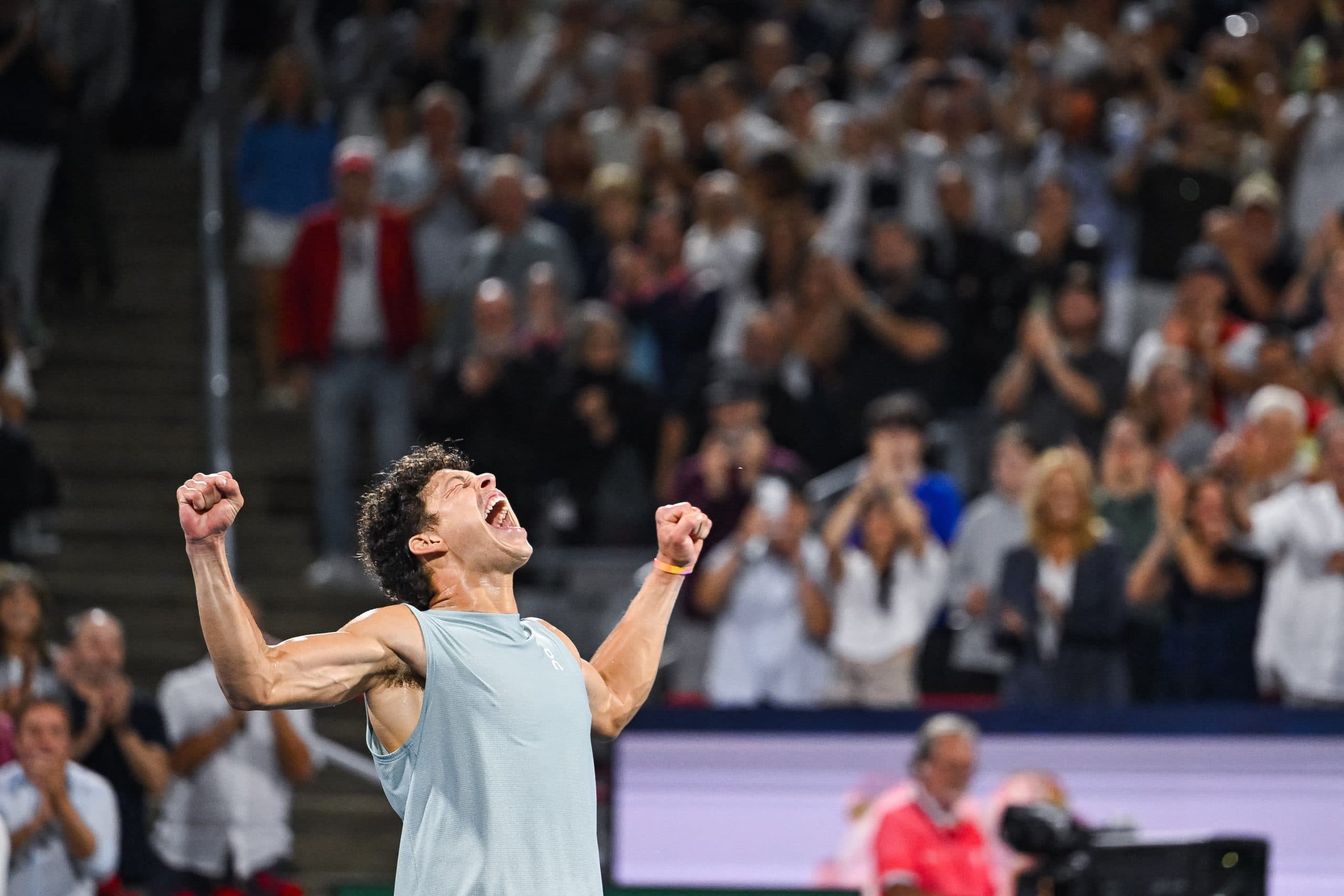
The script was written before Brandon Nakashima even stepped onto the court in Mason, Ohio on August 15. Daniil Medvedev, the World No. 6, was supposed to grind his way through. The 24-year-old American had other ideas. Nakashima delivered a masterclass in controlled aggression, taking down the fifth seed 6-3, 3-6, 6-3 in a 2-hour, 9-minute thriller that had the Cincinnati crowd roaring.
This wasn't just a win. It was a statement. Nakashima's serve-and-forehand combination proved relentless, forcing Medvedev to camp out far behind the baseline and completely disrupting his rhythm. The turning point arrived in the second set when Medvedev, frustrated by a tight line call, smashed his racket and drew a code violation. That outburst sparked a brief surge that earned him the second set, but it also laid bare a growing frustration: he simply couldn't find a way through Nakashima's delivery.
📊 Nakashima faced just ONE break point all match - and he saved it in the clutch third set, converting 2 of 7 break opportunities against the Russian.
The stats tell the real story. For a player who has built his career on consistency, beating a two-time Grand Slam finalist with such efficiency on a big stage was a revelation. It marked Nakashima's second win over Medvedev, duplicating his 2024 Dallas Open result, and it immediately reset the trajectory of his season.
A Career-Defining Week in Mason
The Medvedev match was only the beginning. Two days later, Nakashima proved the upset was no fluke by dismantling third seed Alexander Zverev 6-4, 7-6 to reach his first-ever Masters 1000 quarterfinal. Suddenly, the tennis world was asking a different question: Was this the week the American breakout truly began?
His run ended in a gritty semifinal against eventual champion Jannik Sinner, losing 4-6, 6-4, 6-7 in a 2-hour, 38-minute slugfest that could have gone either way. While the loss to Sinner on August 17 ended his magical week, the prize was already substantial. Nakashima banked $315,000 USD and 300 ranking points, a haul that immediately propelled him to a projected World No. 19 in the live rankings - a career high and a remarkable leap from his No. 27 entry point.
| Round | Opponent | Score | Duration |
|---|---|---|---|
| Round of 32 | Daniil Medvedev (5) | 6-3, 3-6, 6-3 | 2h 09m |
| Quarterfinal | Alexander Zverev (3) | 6-4, 7-6 | 1h 51m |
| Semifinal | Jannik Sinner (1) | 4-6, 6-4, 6-7 | 2h 38m |
The New American Vanguard
Here's the context that matters: Nakashima is now the top-ranked American male under 25, and he officially broke into the ATP Top 30 for the first time in his career following the Medvedev win. For a player often seen as a solid, reliable pro, this week in Cincinnati transformed his ceiling. He isn't just a consistent baseliner anymore; he's a legitimate threat on hard courts who can beat the very best when he plays with this level of intent.
📊 $315,000 USD and 300 ATP points earned in Cincinnati - a career-defining payoff that vaulted him into the Top 20 conversation.
What's Next for Nakashima?
The momentum from Cincinnati isn't fading anytime soon. On August 19, the ATP announced that Nakashima has accepted a wildcard into the Rolex Paris Masters (October 27 - November 1). The decision signals his intention to capitalize on this breakthrough through the end of the season, ensuring he carries this confidence into the indoor hardcourt swing.
The immediate prize is undeniable: a spot in the Top 20 and a massive check. But the long-term impact of beating Medvedev in straights sets and pushing Sinner to the brink is even more significant. Nakashima has officially announced himself as a force in the next generation, and with the US Open just around the corner, his Cincinnati form makes him one of the most dangerous dark horses in the draw.