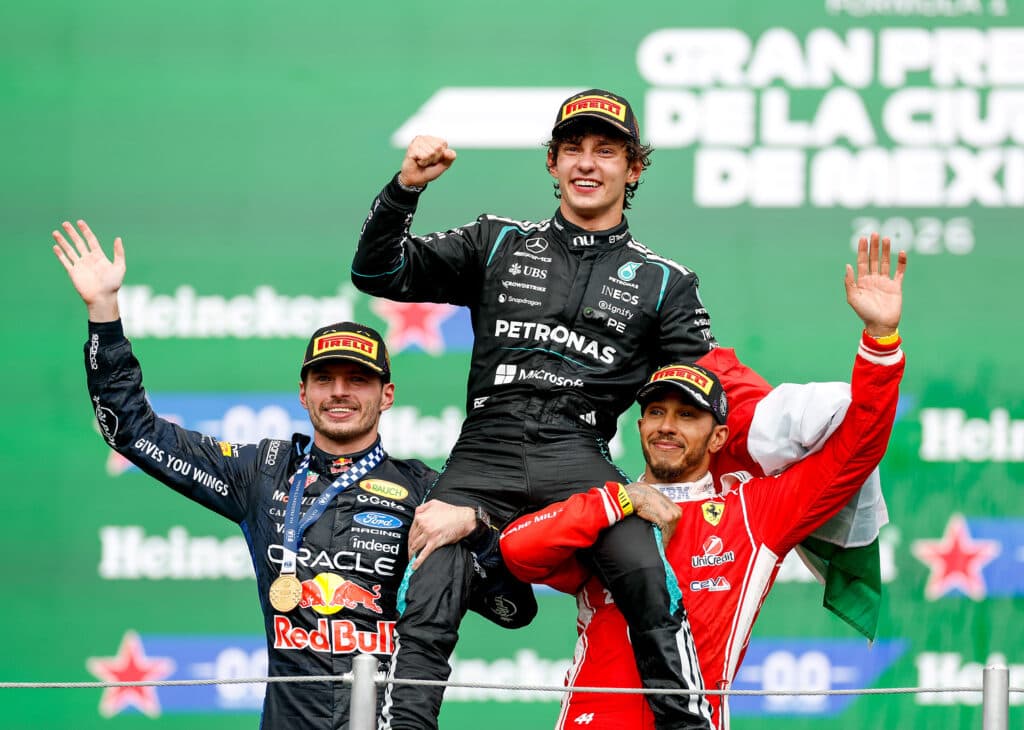
Toto Wolff has never been shy about a hot take, but his latest lands harder than most. The Mercedes boss reckons the old model of F1 champions has died with Kimi Antonelli's rise - and honestly, the evidence is stacked in his favour.
Let's be clear about what Wolff is saying. He isn't claiming champions are extinct. He's claiming the production method is. The old blueprint - dominate the junior categories, spend years seasoning in midfield machinery, earn a top seat the hard way, then peak for a decade - is officially under threat. Antonelli is the counter-example everyone's pointing at: fast-tracked into the Mercedes seat in 2025, thrown into the deepest end of the pool, learning in front of the cameras instead of behind a protective shield.
Why does this land now? Scan the 2026 grid. It's packed with drivers barely old enough to rent a car, holding down race seats at the biggest teams in the world. Add to that a record 22-race calendar and development programmes that prioritise raw ceiling over proven mileage, and you've got a sport where a 19-year-old isn't a project anymore - he's a statement of intent. If Wolff is right, every young driver's pathway, and how teams scout, sign and protect talent, is being rewritten in real time. The conversation around Wolff Reckons Old Model of F1 Champions Has Died With Kimi Antonelli - He's Right is no longer a niche paddock debate. It's a full-blown reckoning.
From Apprentice to Franchise Player Overnight
Compare the two career arcs and the shift is glaring. The old way: earn your stripes, grind through junior formulae, spend three or four seasons proving you won't bin it, then get the call. The new way: plug in and perform. Mercedes' bet on Antonelli was both a statement and a risk - a rookie straight into the seat vacated by Lewis Hamilton, with zero margin for a slow start. That's not an apprenticeship anymore. That's a franchise signing.
The trade-off is uncomfortable and worth naming. Faster arrival, thinner safety net. When you're learning on a three-year deal at a championship-calibre team, one bad season doesn't mean a rebuild - it means a cold phone call. The old model gave a young driver room to fail quietly. The new model fails loudly and publicly.
> 📊 Rookie hype cycles have compressed dramatically - where a first-year driver once got a season to find their feet, the modern grid expects points and podiums from round one.
Why He's Right: The Forces Killing the Old Pathway
Start with the cost of waiting. Teams can't afford to develop a driver for five seasons when a rival will poach that upside the moment it's visible. The economics now reward conviction over patience - sign the ceiling, coach the floor. Add data, which has quietly replaced the old eye test. Simulators, telemetry and junior-series analytics let teams project readiness years earlier than traditional scouting ever could. A promising teenager isn't a mystery anymore; he's a dataset with a steering wheel.
| Factor | Old Model | Antonelli-Style Model |
|---|---|---|
| Junior path | Long, formula-by-formula | Compressed, fast-tracked |
| Top-seat timing | Earned after years of seasoning | Awarded on raw ceiling |
| Development safety | Shielded from pressure | Thrown in at the deep end |
| Team stance | Patience | Conviction |
| Public exposure | Gradual | Immediate and intense |
Then there's the calendar and the cars. Cost caps and testing limits mean fewer "easy" years to hide a developing champion - you adapt at speed or you're out. And the commercial machine has its own accelerator: fan culture now crowns potential before results, hype cycles spinning both ends of a career faster than ever. Let's steel-man the skeptics for a second. Is this evolution, or just impatience dressed up as strategy? Critics argue that burning drivers young produces flashes, not legends, and that the old apprenticeship produced completeness. Fair. But the forces above aren't a fad - they're structural, and structural beats tradition every time.