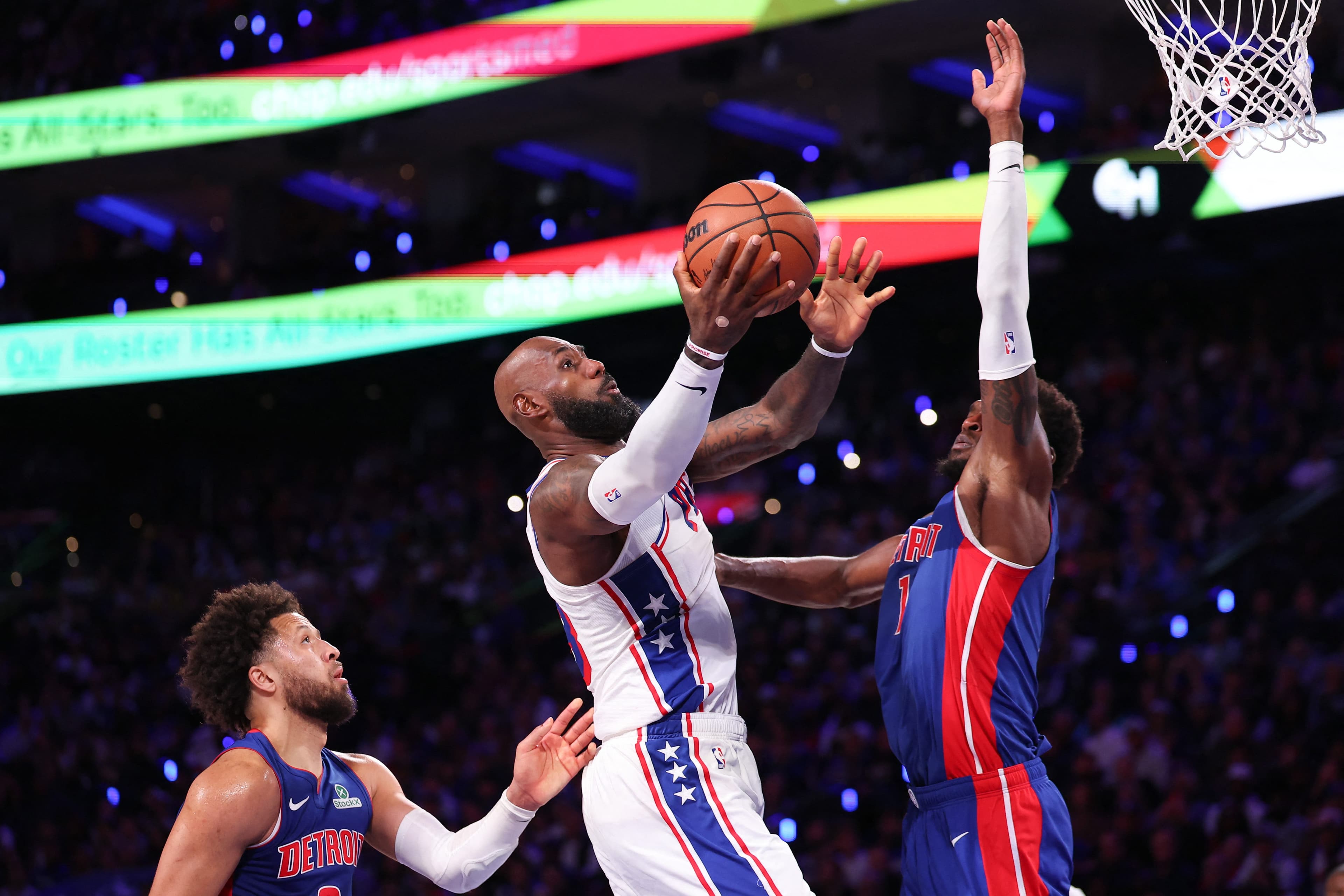
The Wells Fargo Center faithful came expecting a statement. Instead, they got a warning shot - from Detroit, of all teams.
The Pistons walked into Philadelphia and outworked the Sixers down the stretch, turning a winnable home game into a frustrating loss that raises real questions about this team's ceiling in a crowded Eastern Conference. It's October, so nobody's panicking yet. But in a season where every home game against a young, hungry opponent matters, this one stings. Here are the 3 biggest takeaways for Sixers following loss to Pistons at home - the good, the bad, and the ugly.
The Glass Is Still the Problem
Let's start with the ugly, because there's no sugarcoating it: Detroit's frontcourt feasted on the offensive boards all night, and Philadelphia's defensive rebounding effort in key stretches was simply unacceptable. Second-chance points kept the Pistons within striking distance early and then buried the Sixers late, when one clean rebound could have flipped the game.
This isn't a new flaw - it's a recurring one. Rebounding is effort plus fundamentals, and right now the Sixers are losing that battle in both departments. When opponents get extra possessions, everything else gets harder: the defense tires out, the pace tilts, and the margin for error shrinks to nothing.
> 📊 The Pistons' second-chance points kept them alive early and sealed it late - proof that Philadelphia's defensive rebounding in key stretches was the defining failure of the night.
If this team wants to be taken seriously in the East, boxing out and finishing possessions have to become non-negotiable - starting with the next practice, not the next game. For a team with playoff ambitions, being out-toughed on your own floor is a red flag worth treating like one.
Late-Game Execution Is Still a Question Mark
Down the stretch, the offense stalled into isolation-heavy possessions with too little ball movement and too many contested looks. The half-court sets in crunch time looked predictable, and Detroit's defense read them easily - you could almost see the Pistons' bench calling out the action before it happened.
| Category | What Went Wrong |
|---|---|
| Ball movement | Offense stalled into isolation-heavy possessions |
| Shot quality | Too many contested looks, few clean ones |
| Predictability | Half-court sets were easily read by Detroit's defense |
The Sixers have the talent to close games. But talent without structure gets you nights like this one. The coaching staff needs to find cleaner actions that generate quality shots when the clock winds down and the defensive pressure ratchets up.
> 📊 Isolation-heavy possessions defined the final stretch - a repeatable structural issue, not a one-off cold shooting night.
This is the second takeaway, and arguably the most fixable: late-game execution is coaching and reps, not magic. Cleaner screening actions, more off-ball movement, and a go-to counter when the first option gets taken away would go a long way. Until then, every close game is a coin flip - and coin flips don't win playoff series.
The Bench Gives a Real Reason for Optimism
It wasn't all bad. Far from it, actually. The second unit brought energy, pushed tempo, and kept Philadelphia afloat during a rough first-half stretch when the starters were stuck in the mud. In a game that slipped away, that's a genuine building block.
| Unit | Impact |
|---|---|
| Starters | Struggled in first half; crunch-time offense stalled |
| Bench | Brought energy, pushed tempo, kept team afloat |
If the reserve corps can sustain this level of production, it takes enormous pressure off the starters and gives the team a genuine advantage on nights when the stars aren't rolling. That depth could be the difference between a middle-of-the-pack finish and a real playoff push.
> 📊 The second unit kept Philadelphia afloat during a rough first-half stretch - and if sustained, it becomes a legitimate competitive edge.