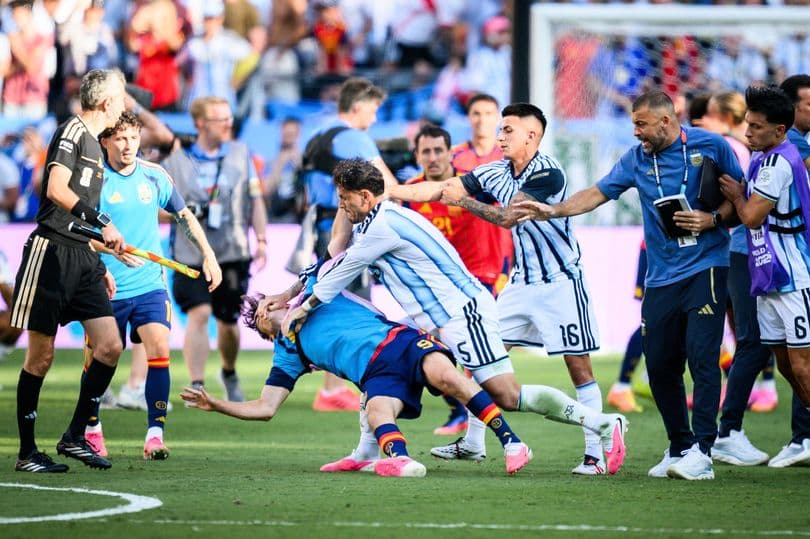
Nearly four years have passed since the chaos at Lusail Stadium turned football’s grandest stage into a blur of bodies, stewards, and simmering tension. On Thursday, the book officially slammed shut. FIFA rejected the Argentine Football Association’s (AFA) final, last-ditch request to overturn the sanctions stemming from the 2022 World Cup final. The verdict confirms the original penalty - a hefty fine and a partial stadium closure - stands in full, capping off a legal saga that has snaked through football’s highest courts and tested the patience of fans on both sides of the rivalry.
For the Albiceleste faithful, this is the bitter pill they feared. For FIFA, it’s a statement of intent: no amount of star power or emotional backstory will bend the rulebook. The AFA’s legal team fought tooth and nail to scrub the record, but the governing body held firm, calling the original disciplinary actions "proportionate to the severity of the breaches." The message is unambiguous - and it echoes all the way to the 2026 World Cup in North America.
The Core Complaint: Why the AFA Kept Fighting
The AFA’s argument was never about denying the mayhem itself. The images of Argentine players launching themselves into the stands and clashing with French counterparts in the tunnel after that penalty shootout thriller are burned into football’s collective memory. Instead, the federation’s lawyers argued the punishment didn’t fit the crime. Specifically, they sought to slash the 300,000 Swiss Franc fine (roughly $325,000 USD) and completely scrap the one-match partial stadium closure, claiming FIFA was setting a dangerous precedent for future finals played under extreme emotional pressure.
The plea also carried symbolic weight regarding goalkeeper Emiliano Martínez. While the Aston Villa shot-stopper was never formally banned - his infamous Golden Glove gesture at the trophy presentation drew an investigation but no suspension - the AFA wanted official records to explicitly state no player acted with malicious intent. In their view, it was a heat-of-the-moment eruption, not a premeditated breakdown of discipline. Ultimately, the appeal was a desperate attempt to rewrite the narrative of that chaotic night. FIFA, however, wasn’t buying a word of it, citing "order and security" violations as non-negotiable pillars of tournament integrity.
📊 $325,000 USD - The full fine Argentina must pay, upheld after four years of appeals across multiple judicial bodies.
The Verdict: No Reduction, No Mercy
The final ruling, delivered after the Court of Arbitration for Sport (CAS) tossed the case back to FIFA for a procedural review, is a decisive victory for the suits in Zurich. The verdict confirms the AFA must pay the full fine and will face the second match of a partial stadium ban if a similar infraction occurs in the next competitive cycle. The suspended closure was already served during Argentina’s qualifier against Ecuador back in 2023, so the practical hit is done - but the stain on the record remains.
FIFA’s response further reinforced their stance, emphasizing that the disciplinary actions taken in January 2023 were justified and proportionate. This rejection effectively slams the door on any remaining legal avenues within football’s governance structure. With no player bans issued in the original ruling and the financial penalty upheld, the AFA has run out of road. For fans hoping for a last-minute amnesty ahead of the 2026 World Cup, this is the definitive "no." The courtroom drama is over, and the scoreboard reads FIFA 2, AFA 0.
Table: Argentina’s Sanctions Timeline
| Date | Action | Outcome |
|---|---|---|
| Dec 23, 2022 | FIFA opens disciplinary proceedings | Investigation launched |
| Jan 27, 2023 | Fine + partial stadium closure issued | No player bans |
| 2023 | AFA appeal to FIFA Appeal Committee | Rejected |
| 2023-2024 | AFA appeal to CAS | Case returned to FIFA |
| Aug 28, 2026 | FIFA final verdict | Sanctions upheld in full |