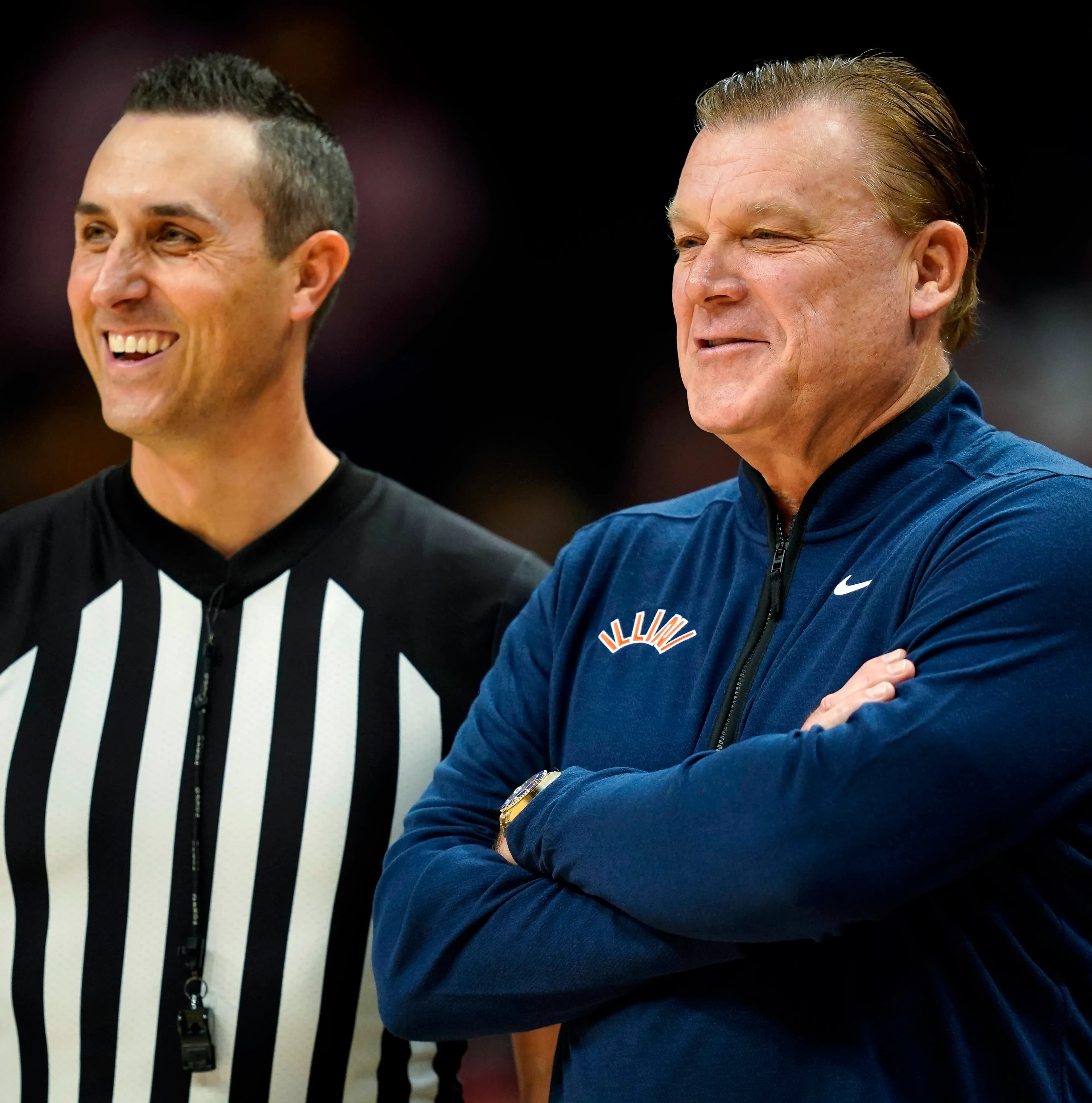
Revenue sharing. NIL megadeals. A transfer portal that never sleeps. The college basketball landscape has been flipped upside down, and coaches are dropping like flies, unable to keep rosters intact or balance books that now resemble NFL salary caps. Yet, while the chaos consumes the sport, Illinois’ Brad Underwood is quietly building a dynasty. As the Illini kicked off fall practice this week, I caught up with Illinois’ all-time leading scorer, Deon Thomas, to break down exactly how Underwood has turned the sport’s biggest obstacles into his greatest weapons.
The conversation was electric. Thomas, now an assistant at UIC but forever an Illini legend, didn't mince words. "Everyone's panicking about the portal and the money. Underwood? He woke up and said, 'Let's build a machine.'" That machine is humming at full capacity, and Thomas has the receipts to prove it.
The $2.9 Million Roster Blueprint: Culture Fits Over Talent Grabs
Underwood isn’t just playing the NIL game; he’s rewriting the playbook entirely. Thomas pointed to a jaw-dropping stat: Illinois has 11 of 13 scholarship players locked into two-year NIL guarantees, with an average annual payroll of $2.9 million - top-5 nationally per ON3’s team valuation tracker. But here’s the kicker: the money isn’t the secret. It’s the strings attached.
“Underwood treats the transfer portal like the NFL combine,” Thomas told me following Illinois’ open practice on August 12. “He only brings in guys who pass a 6-hour film session on team defensive rotations. Six hours. That’s not a vibe check. That’s a job interview.” That obsessive vetting process is why Illinois’ roster retention hit 91% last season (10 of 11 returners stayed) versus a Big Ten average of 61%. Thomas credits Underwood’s groundbreaking “coach-player profit share” clause - the first in college basketball - which directly aligns player incentives with team defensive metrics.
📊 91% roster retention rate (2025-26) - More than 30 points above the Big Ten average, proving culture beats cash in keeping talent home.
The result? A "pro-style analytical defense" that ranked 3rd in adjusted defensive efficiency (KenPom, 94.7) last season. This isn’t just about stopping opponents; it’s about creating a system so cohesive that players won't leave. “In the portal era, talent leaves for money,” Thomas said. “Underwood made it so the culture is worth more than the cash. Guys are staying because they know the system makes them better.”
| Metric | Illinois | Big Ten Average |
|---|---|---|
| Retention Rate | 91% | 61% |
| Avg. Player Payroll | $2.9M | $1.4M |
| Def. Efficiency Rank | 3rd (KenPom) | - |
Mastering Free Agency: The Mid-Year Window and the Filipowski Gamble
While other coaches were still adjusting to the NCAA’s new direct institutional NIL model, Underwood was already three steps ahead. He was the first Big Ten coach to exploit the new “mid-year free agency” window (effective July 1, 2026), signing four transfers before the season even tipped off. This isn't adaptation - it's acceleration.
The headliner? Matt Filipowski - the brother of former Duke star Kyle - inked to a $1.1 million, one-year deal, the largest NIL contract in Illini history. Critics called it a gamble on name recognition. Thomas calls it a masterstroke of evaluating untapped potential. “The old guard is dead. The collectives are gone. Underwood understood that the NCAA’s new direct pay model meant you either adapt instantly or get left behind,” Thomas argued on the Stretch Run Podcast.
This aggressive, NFL-style approach extends to the recruiting trail. Underwood’s 2026 class is ranked #7 per 247Sports, featuring three top-40 recruits. But here’s the twist: he built that class without a single collective dollar, using the NCAA’s new direct institutional model to seal the deals. Thomas called it the ultimate proof that Underwood isn’t just surviving the new era - he’s defining it. “Other coaches are still crying about the old rules. Underwood read the new rulebook and memorized it in a weekend.”