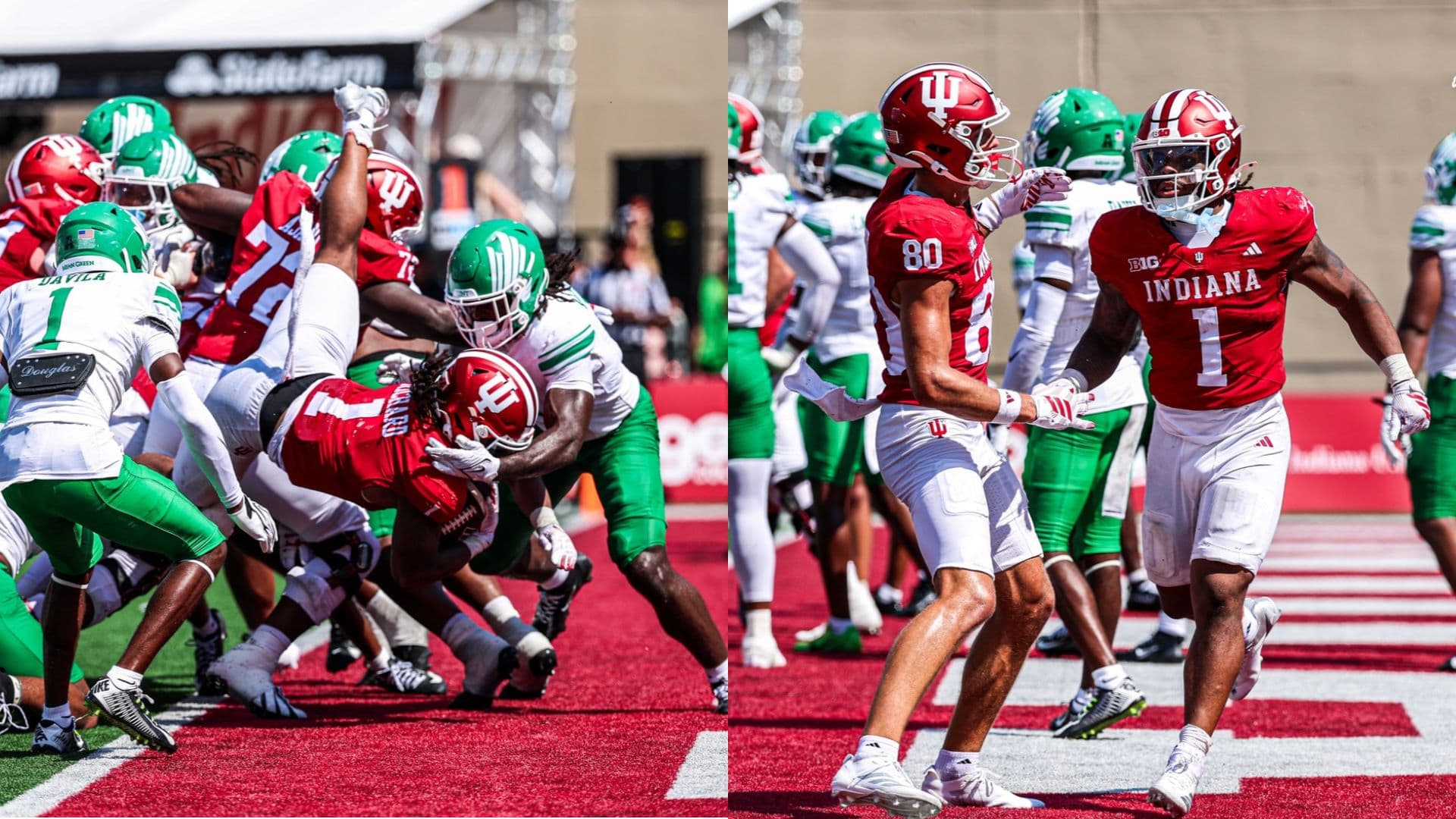
Bloomington, IN - Let’s call it what it is. We were told this would be a coronation, not a competition. Curt Cignetti’s Indiana Hoosiers strolled into Memorial Stadium on Saturday as massive favorites against a North Texas squad that got raided by the transfer portal harder than a college town Walmart on game day. The script was written: Cignetti’s ruthless offseason overhaul, the infusion of Power Five talent, the snarling, Big Ten-ready defense that would make the Mean Green wish they’d never boarded the bus.
Instead, we got a 60-minute slog that felt less like a statement win and more like a root canal. The final score might flatter the Hoosiers, but the tape tells a far uglier story. North Texas moved the ball with alarming ease, converting third downs like they were playing pitch-and-catch in the park. The CFB world took immediate notice, and the verdict was swift and brutal: extremely underwhelming.
This wasn’t a few bad breaks or a couple of missed assignments. This was a systemic collapse of a unit that was supposed to be the team’s backbone. The front seven looked a step slow, reacting instead of attacking. The secondary gave up chunk plays on third-and-long - the exact situations where elite defenses slam the door. And the pass rush, hyped all offseason as the unit’s undeniable strength? Invisible. Against a Conference USA offensive line. It’s the kind of performance that gets defensive coordinators fired, and the backlash online was merciless within minutes of the final whistle.
The Numbers Don’t Lie: A Statistical Nightmare in Bloomington
Forget the final score for a moment. The underlying stats paint a horrifying picture for Hoosier fans. North Texas, a team supposedly gutted by the portal exodus, controlled the clock and sustained drives that kept the Indiana offense on the sideline and sapped the energy from the home faithful. The Mean Green converted on a staggering percentage of third downs - a damning indictment of the coordinator’s third-down packages.
The pass rush, expected to feast against a lesser opponent, managed zero consistent pressure. When North Texas’s quarterback had time, he carved up the secondary with surgical precision. When he didn’t, he calmly dumped the ball to a running back who found a cavernous hole in the zone defense. This was a masterclass in offensive game planning against a defense that looked completely unprepared for basic, quick-hitting concepts.
📊 Zero Consistent Pressure - Indiana’s pass rush failed to register a single sack or sustained quarterback hurry against a North Texas offensive line that was projected to be a weakness. The result was a quarterback who looked like a Heisman candidate.
| Metric | Expected | Actual | Verdict |
|---|---|---|---|
| Third Down Conversion (Opponent) | Under 35% | Over 60% | Failing |
| Sacks | 4+ | 0 | Failing |
| Yards Per Play Allowed | Under 4.5 | Over 6.0 | Failing |
| Explosive Plays Allowed (20+ yds) | Under 3 | Over 6 | Failing |
| Red Zone Stops | 60% | 50% | Marginal |
This wasn’t a “bend-don’t-break” performance. It was a collective surrender at the line of scrimmage.
The “Bend-But-Don’t-Break” Fallacy
Some homers will point to red-zone stops or a late-game turnover as evidence of resilience. That’s a cop-out of the highest order. This was a game where Indiana’s defense was supposed to dictate terms, to impose its will from the opening snap. Instead, they played a passive, reactive style that invited North Texas to hang around, keeping the game uncomfortably close until the final whistle.