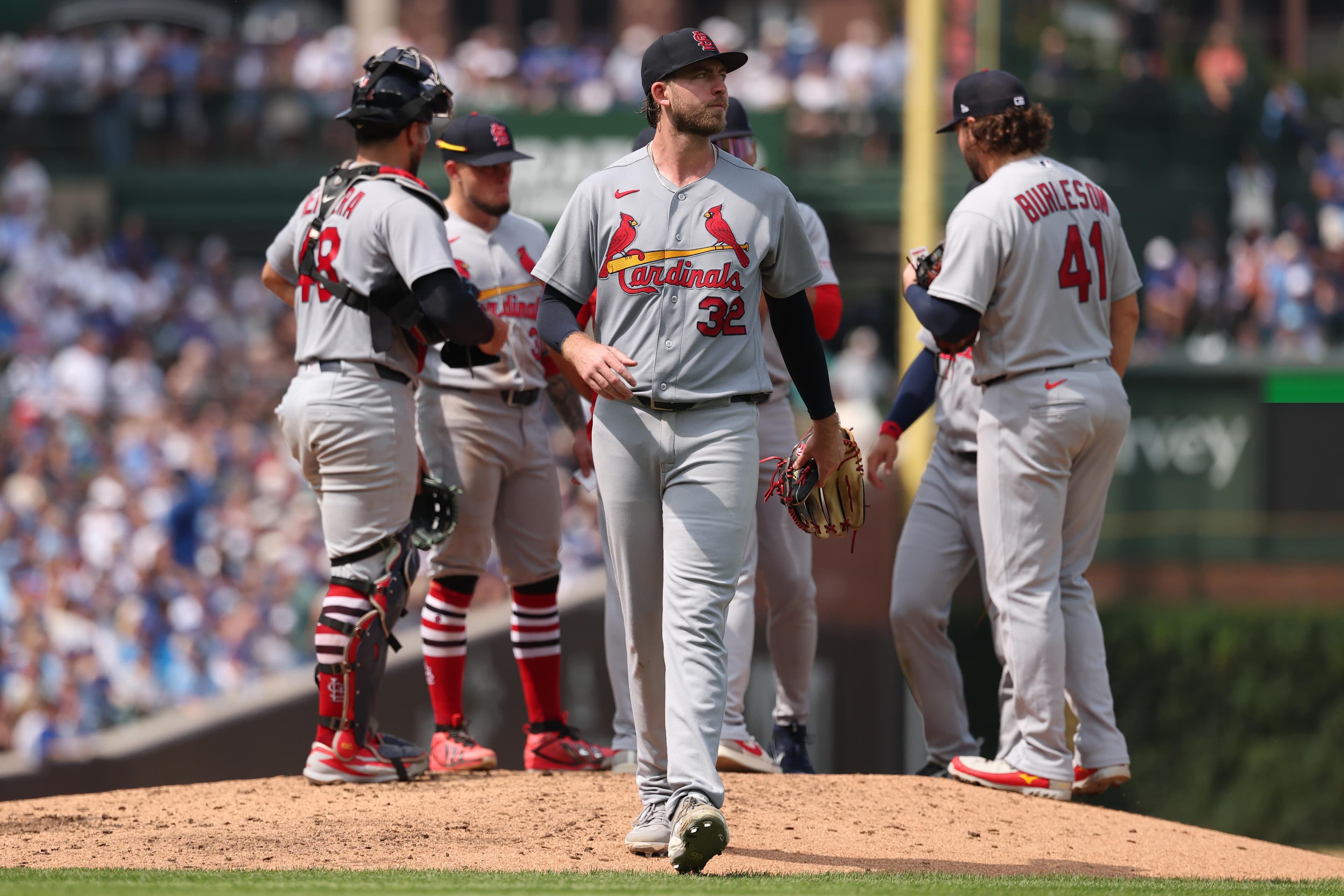
CHICAGO - Matthew Liberatore did everything he could. Six-plus innings of one-run ball. A curveball that had Cubs hitters swinging at air all night. The kind of performance that should have been the story. Instead, it's the same old refrain: the St. Louis Cardinals waste strong Liberatore start as Cubs win Friday, and the division race just got a whole lot tighter.
The left-hander was masterful from the first pitch. He carved through Chicago's order with surgical precision, mixing that sharp-breaking curveball with a sinker that kept Wrigley Field's ivy out of play entirely. When he exited in the seventh, he had scattered just a handful of hits, punched out seven, and handed the bullpen a lead that looked safe. It wasn't just a quality start - it was the kind of outing that October rotations are built on.
But baseball is cruel that way. The Cardinals' bats, so explosive in bursts this season, went completely dormant. They scratched across just enough runs to tease the faithful, but a lineup that needs to punish mistakes found no knockout blow. Early baserunners were stranded. A two-out rally in the fifth died on a warning-track fly ball. The bullpen - the same bullpen that's been a lifeline for this club all summer - finally cracked under the pressure of a one-run lead.
📊 Liberatore's final line: 6.1 IP, 4 H, 1 ER, 7 K - He gave the Cardinals everything they could have asked for, and it still wasn't enough.
This isn't the first time St. Louis has wasted a gem, and it won't be the last. But on a Friday night in August, with the National League Central standings tighter than a playoff race in October, this one stings. Liberatore deserved better. The clubhouse knows it. The fans who packed the visitors' section know it. And the Cubs, who stole one they had no business winning, definitely know it.
The Turning Point: A Seventh-Inning Crack in the Armor
The Cardinals had control. Then came the trouble.
Through six innings, Liberatore had navigated Chicago's order with the kind of poise that separates good starters from great ones. He limited hard contact to almost nothing. He kept the Cubs' biggest bats in the yard. And when manager Oli Marmol walked to the mound to start the seventh, there was a confidence in the dugout that this one was wrapped up.
The bullpen door swung open, and the air at Wrigley shifted. A leadoff walk. A seeing-eye single that found the hole between short and third. A sacrifice fly that cut the deficit in half. Suddenly, the crowd that had been sitting on its hands all night found its voice. The Cardinals' infield, so sharp early, couldn't turn the double play that might have ended the threat. The tying run crossed the plate, and the game was no longer in St. Louis's hands.
It wasn't a meltdown. It wasn't a blowup. It was a slow bleed - a pitch that caught too much plate, a ground ball that took a fortuitous hop, a sequence of events that separates a crisp win from a frustrating lament. The Cardinals' reliever didn't get shelled, but he didn't get the job done either. And it was the Cubs who walked off the field with the momentum and, eventually, the scoreboard advantage.
| Date | Opponent | IP | ER | Result |
|---|---|---|---|---|
| Aug 14 | Cubs | 2.2 | 2 | Loss |
| Aug 12 | Reds | 3.0 | 0 | Win |
| Aug 11 | Reds | 2.1 | 1 | Win |
| Aug 9 | Dodgers | 1.2 | 3 | Loss |
| Aug 8 | Dodgers | 3.0 | 0 | Win |
| Aug 6 | Braves | 2.0 | 1 | Win |
| Aug 5 | Braves | 2.2 | 0 | Win |
| Aug 3 | Mets | 1.1 | 2 | Loss |
| Aug 1 | Mets | 2.0 | 0 | Win |
| Jul 30 | Rangers | 3.0 | 1 | Win |